The Handoff Nobody Scripted: When Your Driver Becomes Your Spokesperson
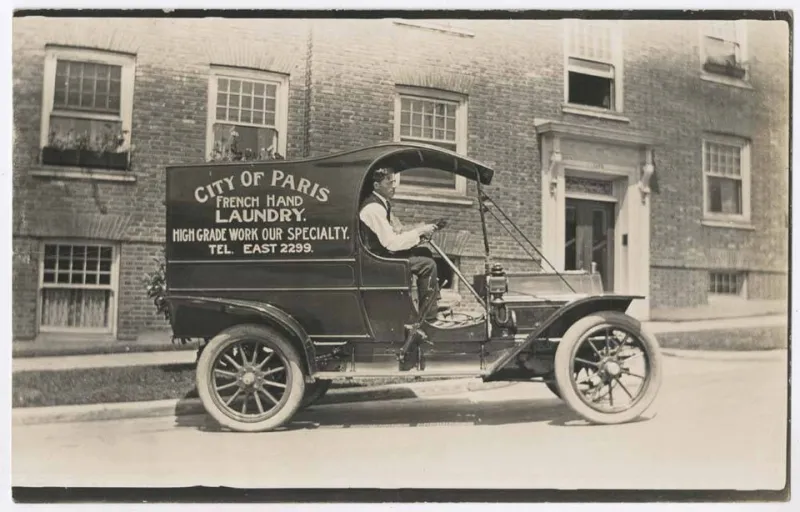
Photo: Unknown authorUnknown author, Public domain, via Wikimedia Commons
Consider a simple scenario playing out thousands of times a day across the United States. A customer in Phoenix has ordered equipment for their small business. The shipment has traveled 2,000 miles without incident. Then, an hour before delivery, their phone buzzes with a message: "Arriving 2-4. Buzzer #3 broken, call when there."
No name. No company. No context. The entire customer experience — weeks of marketing spend, careful fulfillment, competitive pricing — now rests on eleven words typed by a driver mid-route.
The Last Interaction Outweighs the First
Marketing departments obsess over first impressions. Yet behavioral research consistently shows that the final moment of an experience disproportionately shapes how people remember it. In freight and parcel delivery, that final moment is almost never your brand team — it's a driver's text message, a phone call, or a doorstep interaction.
This creates an uncomfortable truth for American businesses: your brand's real front door may be someone you've never met, driving a vehicle you don't own, communicating in a language your customer may not speak fluently.
The stakes rise sharply in a country as linguistically diverse as the US. More than one in ten American adults speaks a language other than English at home, and in major logistics corridors — Miami, Los Angeles, Houston, New York — the percentages climb far higher. A customer who receives a garbled, jargon-heavy delivery notification isn't just confused; they're anxious. And anxious customers call support lines, dispute charges, and leave one-star reviews.
What Unscripted Communication Actually Costs
The financial damage from poor last-mile communication rarely shows up on a single invoice. It accumulates:
- Failed delivery attempts. A vague or mistranslated message means the customer isn't home, the gate code is wrong, or the instructions were misread. Redelivery costs carriers money and costs you time.
- Support tickets. Every "where is my delivery?" call is a cost center triggered by a message that should have answered the question in the first place.
- Eroded trust. Customers don't distinguish between your brand and the person delivering to them. A rude or incomprehensible exchange reads as a statement about your company.
None of these appear as a line item labeled "communication failure," which is precisely why the problem persists.
Standardized Messaging: Cheap to Build, Hard to Ignore
The fix is not to turn drivers into copywriters. It's to give them tools that make good communication the path of least resistance.
Delivery message templates. A standard set of pre-approved notifications — out for delivery, delayed, arrival window, access instructions, delivered — removes improvisation from the equation. Drivers select, personalize the time, and send. The message carries your brand voice because you wrote it.
Multilingual variants. Templates should exist in the languages your customer base actually speaks. In practice, for most US metro markets, that means at minimum English and Spanish, with additional languages added based on your delivery geography. Translation-ready templates — written in plain, idiom-free language before translation — keep costs down and accuracy up.
A communication protocol for exceptions. What happens when a driver needs to say something the templates don't cover? A short escalation script, plus access to a phone interpretation service, ensures that unusual situations don't devolve into broken telephone.
The Loyalty Dividend
Businesses that invest in this layer report a pattern: customers stop calling to ask where things are, failed delivery rates drop, and — the part that's hardest to quantify — satisfaction scores climb. A customer who received a clear, courteous, correctly translated delivery message doesn't think "good logistics." They think "good company."
The last mile is the only part of your supply chain your customer ever witnesses. Treat driver communication as a branded channel — budgeted, templated, and measured — and the final touchpoint stops being a liability. It becomes the cheapest customer-experience upgrade available, one text message at a time.