Your Shipping History Is a Credit Score — and Lenders Are Reading It
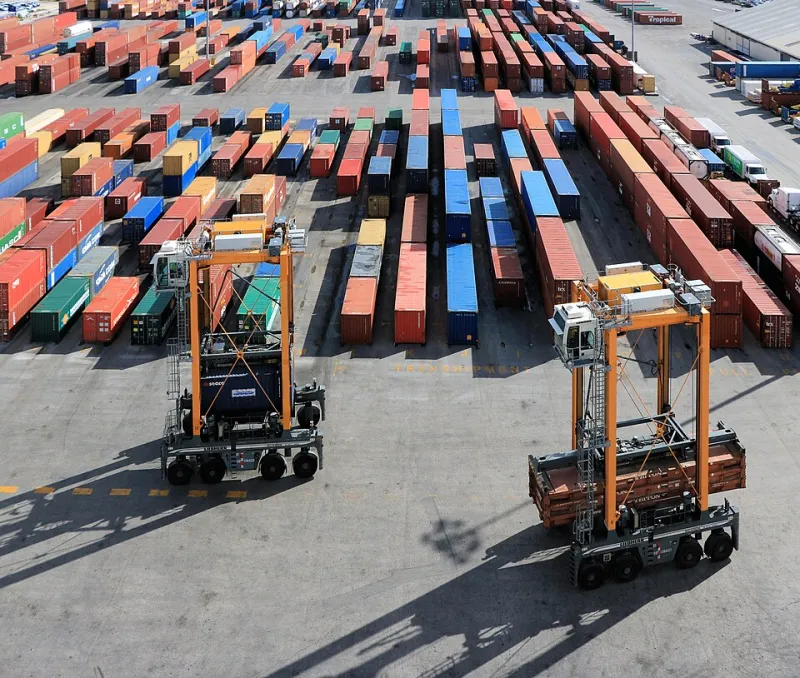
Photo: Paul Harrison, CC BY-SA 4.0, via Wikimedia Commons
When a mid-sized Ohio manufacturer approached its bank last spring for a working capital line, the conversation didn't start with revenue or receivables. It started with the company's freight file. The lender, which had financed several distributors in the same sector, had watched one applicant after another get squeezed by rising transportation costs — and had learned to read a shipper's lane history the way a cardiologist reads an EKG.
The lesson landed hard: your shipping record is a public document, even if you've never opened it.
What Your Freight File Actually Contains
Most shippers imagine their transportation history lives in a folder somewhere in their own ERP. In reality, it's distributed across every broker, carrier, and load board they've touched. Tenders accepted and rejected. Transit times versus promised times. Claim frequency and average claim severity. Seasonal volume swings. Detention and demurrage patterns.
Aggregators and capacity providers compile this data into a de facto scorecard. A national carrier deciding whether to commit trucks to your lane next quarter is, in effect, underwriting you. So is the insurer pricing your cargo liability. So, increasingly, is anyone extending credit against inventory that has to move.
The Three Numbers That Follow You
Lane consistency. A shipper that tenders the same lane reliably every week is a known quantity. A shipper whose volume lurches from 12 loads one month to 40 the next forces carriers to price in uncertainty — and uncertainty is always billed to the customer. Volatility doesn't just raise your rate; it shrinks the pool of carriers willing to quote you at all.
Claim behavior. A claim rate above roughly one percent of loads raises flags, but the pattern matters more than the number. Carriers distinguish between shippers with poor packaging discipline (a fixable operational problem) and shippers who file aggressively over marginal damage (a relationship problem). Both cost you, but the second one follows you longer.
Seasonality honesty. Companies that communicate their peak season forecasts early get planned capacity. Companies that surprise the market in October get the leftover trucks at leftover-truck prices. Your seasonal pattern is visible whether you announce it or not.
The Quiet Cost of a Weak Record
The damage rarely shows up as a line item labeled "penalty for being difficult." It shows up as a rate that's 8 to 12 percent above what a comparable shipper pays on the same lane. It shows up as a tender acceptance rate that quietly drops below 70 percent during tight capacity, forcing you into the spot market at the worst possible moment. It shows up as a lender adding a covenant or a cushion because your cost of goods delivered looks unstable.
None of this is hypothetical. During the 2021–2022 capacity crunch, shippers with strong tender acceptance and clean claim histories retained dedicated capacity while others were begging on load boards. The difference wasn't luck. It was reputation, compiled into data.
Run Your Own Audit Before Someone Else Does
Once a year, sit down and answer four questions with real numbers:
- What percentage of our tenders were accepted on the first offer, and how has that trended?
- What is our claim rate by lane and by product category — and are the causes operational or contractual?
- How predictable is our volume, and have we communicated next quarter's forecast to our core carriers?
- If a lender or a top-tier carrier pulled our file today, would the story be one we'd tell proudly?
If the answers are uncomfortable, the fix is rarely dramatic. Packaging standards, forecast discipline, and honest communication about volumes move the needle within two quarters. Freight reputations, like credit scores, respond to consistent behavior over time.
The 40-foot container leaving your dock is more than cargo. It's a data point in a file someone else is keeping. Make sure it's a file you'd be willing to read out loud.