When the Road Vanishes: Turning Highway Closures from Crisis into Contingency
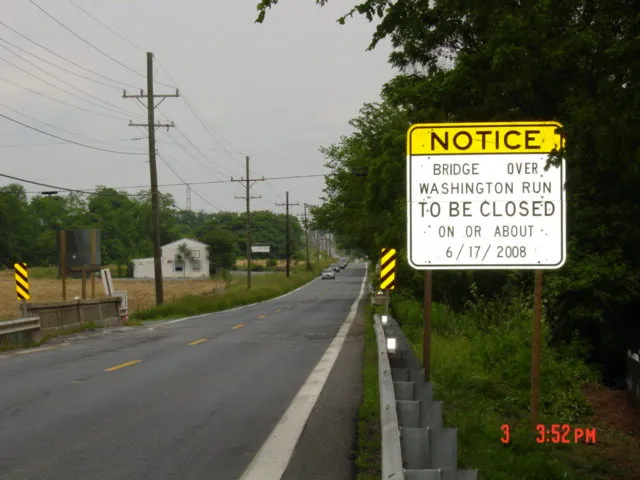
Photo: Federal Highway Administration, Public domain, via Wikimedia Commons
On a Tuesday morning in 2023, a stretch of Interstate 95 in Connecticut gave way after a fuel tanker fire compromised the overpass above it. Within hours, roughly 120,000 vehicles a day had nowhere to go. For commuters, it was an inconvenience. For freight operations moving time-sensitive loads along the Northeast corridor, it was a cascade: detours onto arterial roads never engineered for 80,000-pound combinations, delivery windows missed by half a day, and detention clocks running at facilities that never saw their appointments arrive.
Highway closures are not freak events. They are a permanent feature of the American freight landscape, and the operations that treat them as such — rather than as emergencies — consistently come out ahead.
The Anatomy of a Ripple
A closure never affects just the load on the closed road. Consider what happens after a major bridge failure or a washout:
- The displaced loads. Every truck that would have used that segment must be rerouted, often adding 100 to 300 miles depending on geography. Out west, where interstates can be 150 miles apart, a closure of I-40 may force a 400-mile swing through secondary highways.
- The displaced capacity. Detoured trucks burn more hours of service under FMCSA hours-of-service rules. A driver who loses two hours to a detour may be forced into an unplanned 10-hour reset, taking that tractor out of the market entirely.
- The displaced rates. Spot pricing on affected lanes typically spikes within 24 to 48 hours of a major closure, as shippers compete for the shrinking pool of carriers willing to absorb the added mileage.
- The displaced appointments. Warehouse docks scheduled around precise arrival windows begin to jam. A single missed appointment can push a load to the next day, and the next, as backlogs compound.
The math is unforgiving. A reroute that adds 180 miles at a marginal cost of $2.20 per mile represents roughly $400 per load before detention, per diem, or missed retail windows are counted. Multiply across a fleet of committed loads and a single closure can erase a month's margin on a lane.
Where Contracts Go Quiet
Here is the uncomfortable truth most shippers discover mid-crisis: their freight contracts are silent on reroutes. Standard terms often address late delivery in the abstract, but they rarely specify who bears the cost when the delay is caused by a highway closure, who has authority to approve an out-of-route deviation, or what happens to a rate quoted on a lane that no longer exists in its original form.
That silence gets resolved in one of two ways: through negotiation conducted calmly in advance, or through negotiation conducted badly over the phone while a truck sits idle. The second option is almost always more expensive.
A Detour Clause Worth Writing
A practical rerouting provision does not need to be a legal epic. It needs to answer four questions clearly:
1. Who decides? Designate which party has authority to authorize a reroute and under what threshold — for example, any added mileage above 50 miles or any delay exceeding four hours triggers a mandatory notification and approval step.
2. Who pays? Establish a pre-agreed formula for out-of-route compensation. Many well-drafted agreements reference a per-mile add-on tied to a recognized fuel and mileage index, avoiding the need to haggle while fuel prices and driver hours are actively burning.
3. Who communicates? Require carriers to notify shippers of a closure-driven reroute within a defined window — say, two hours of the driver becoming aware — and require shippers to confirm revised appointment times with consignees on their side.
4. What about the rate? State whether the contracted rate holds through a reroute with a mileage adjustment, or whether the parties will re-quote. Ambiguity here is where most disputes are born.
Building the Real-Time Muscle
Clauses are the skeleton; protocol is the muscle. Shippers and carriers that weather closures well tend to share three habits:
- Lane mapping with alternates. For every high-volume lane, document the two most viable alternate routings before they're needed. Include height, weight, and hazmat restrictions on those alternates — a detour that adds a 13'6" bridge is not a detour for every load.
- Subscription to real-time data. State DOT 511 systems, FMCSA advisories, and commercial traffic feeds should feed directly into dispatch, not sit in a browser tab someone checks when they remember.
- A pre-negotiated carrier bench. When a closure strands your primary carrier's equipment on the wrong side of a washout, the shipper with two vetted secondary carriers on the lane loses a day. The shipper without one loses a week.
For cross-border and international movements, the stakes multiply. A closure on a key corridor into Laredo or Detroit doesn't just reroute freight — it can jeopardize customs appointment windows and bonded transit timelines, where a missed slot may mean days of delay and storage accrual. This is precisely where a logistics partner with multilingual dispatch capability earns its keep: coordinating reroutes with Mexican or Canadian draymen, brokers, and consignees across time zones and languages, in real time, without anything lost in translation.
The Takeaway
You cannot prevent a bridge from failing or a river from rising. But the difference between a closure that costs you a surcharge and one that costs you a customer is almost always preparation that happened months earlier — in a contract clause nobody expected to use and a routing plan nobody hoped to need. Write the detour language now. The road will do the rest.