Line Item by Line Item: The Quiet Fees Inflating Your Freight Budget After Midnight
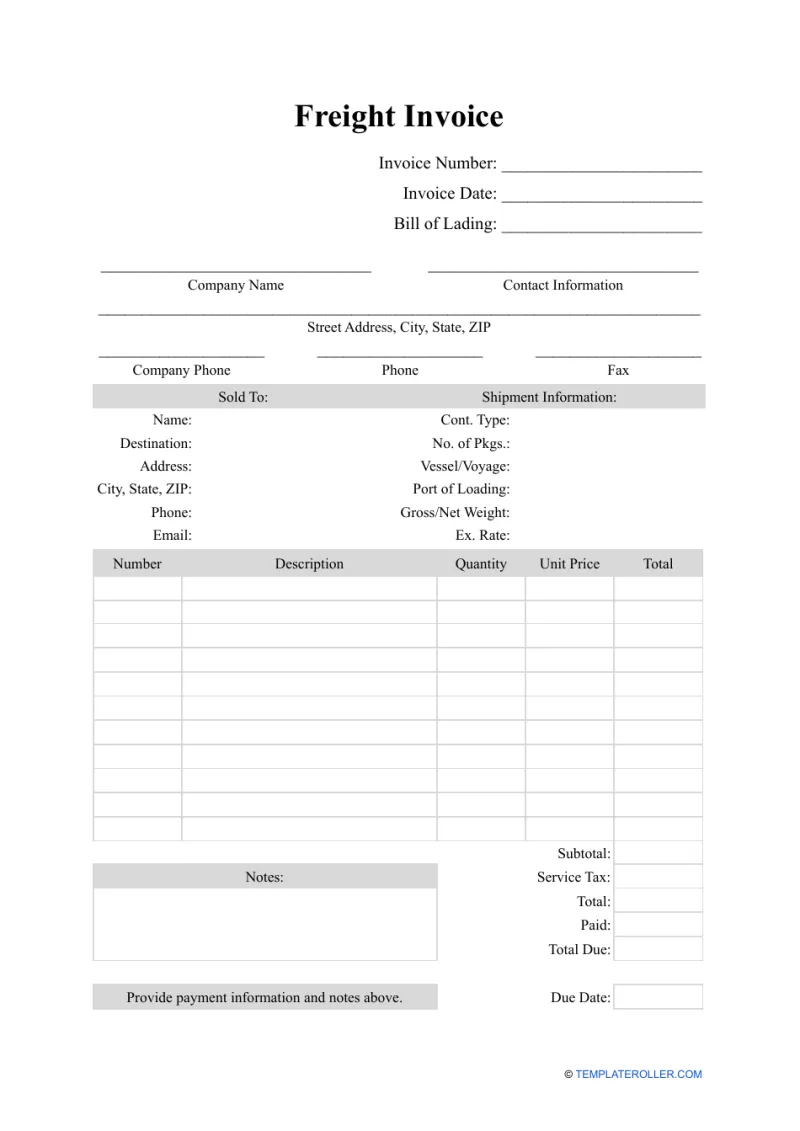
Photo: freight invoice paperwork audit warehouse desk, via data.templateroller.com
The invoice that arrives at 3 a.m. rarely announces itself. It lands in your inbox alongside a hundred other notifications, and unless your accounts payable team has been trained to read it closely, the damage is done before anyone looks twice. Accessorial charges — the add-on fees attached to nearly every truckload and LTL shipment — are the freight industry's quietest profit center, and for many American shippers, they represent an unexamined leak of 10 to 20 percent of the annual transportation budget.
The good news: most of these charges are auditable, disputable, and negotiable. The bad news: carrier contracts impose strict deadlines, and a missed window usually means the fee becomes permanent.
Why Accessorials Deserve Their Own Audit
Base linehaul rates get negotiated, benchmarked, and renegotiated. Accessorials rarely receive the same scrutiny. They are issued after the fact, often by the carrier's billing department rather than the dispatcher who managed the load, and they are frequently calculated from data the shipper never sees — a driver's arrival timestamp, a scale ticket, a warehouse log.
That information asymmetry is where errors thrive. Industry estimates consistently suggest that a meaningful share of accessorial billings contain mistakes: duplicate charges, fees applied without supporting documentation, or rates that don't match the contracted schedule. On a mid-sized shipper moving 500 loads a year, even a modest error rate compounds into real money.
Anatomy of an Invoice Audit
Consider a representative example. A food distributor in the Midwest reviews a single week of invoices and finds the following:
- Detention, $350 across three loads. Two of the three show driver arrival timestamps after the scheduled appointment, meaning the clock should never have started. One is legitimately billable.
- A layover charge, $500. The load delivered on time; the fee references a "reschedule" the shipper never requested. No documentation attached.
- Lumper fees, $180. The amounts match the receipt — but the contract caps lumper reimbursement at $150 per stop.
- A reweigh, $85. The reclassified weight turned out to be identical to the shipper's stated weight. The reweigh was unnecessary and, under the contract, billable only when a discrepancy is confirmed.
Four charges. Three errors. Total recovery: roughly $615 on one week of freight — annualized, a five-figure sum.
The method is repeatable:
- Pull the contract first. Every dispute starts with the agreed rate schedule, not the invoice.
- Demand the backup. Detention requires timestamps; reweighs require scale tickets; lumpers require itemized receipts. A charge without documentation is a charge you can decline.
- Flag the clock. Detention and layover disputes almost always turn on whether the driver arrived within the appointment window.
- Dispute in writing, immediately. Most carriers impose a 30- to 90-day billing dispute window. Calendar it like a payment deadline, because functionally it is one.
The Five Most Commonly Misbilled Fees
Across US trucking, the same culprits appear again and again:
- Detention after late arrival. The two-hour free clock starts at the appointment time, not the driver's actual arrival.
- Layover without cause. If the delay originated with the carrier, the fee belongs to the carrier.
- Lumper fees above contract caps. Receipts are mandatory; caps are enforceable.
- Reweigh and reclassification charges with no confirmed discrepancy.
- Duplicate fuel surcharges applied to accessorials — a subtle one, but surcharge treatment of fees should be spelled out in the rate agreement.
Negotiate the Schedule Before You Sign
The strongest shippers don't just audit accessorials — they price them in advance. When reviewing a carrier contract, push for:
- A capped accessorial schedule with fixed dollar amounts rather than "prevailing rates."
- Extended free time at your highest-volume facilities, where loading delays are most likely.
- A documentation requirement as a condition of payment: no timestamps, no scale ticket, no fee.
- A monthly accessorial reconciliation clause, so disputes happen at scale rather than load by load.
Carriers will negotiate these terms, particularly when you bring volume. What they won't do is volunteer them.
The Multilingual Wrinkle
For shippers moving freight across the southern and northern borders, accessorial disputes gain a second layer of complexity: fee notices, lumper receipts, and detention logs are frequently issued in Spanish or French, and a mistranslated term — "espera" rendered as "layover" instead of "waiting time" — can decide whether a dispute succeeds. Bilingual review of carrier documentation is not a luxury; it is part of the audit trail.
Close the Loop
Accessorial leakage isn't a billing department problem. It's a procurement problem, an operations problem, and occasionally a language problem. Treat the invoice as the final mile of the negotiation — because for the carriers billing these fees, it is exactly that.