Who Picks Up When Nobody's There: Building an After-Hours Protocol That Works Without a Call Center
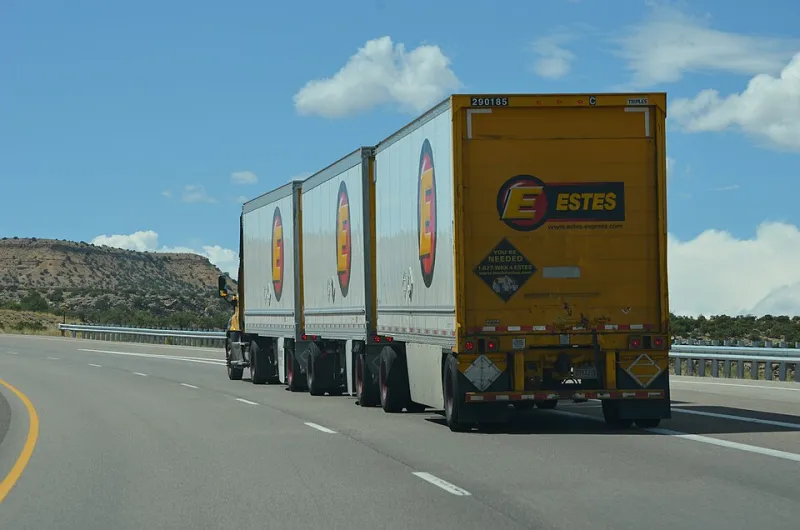
Photo: Bobyellow, CC BY-SA 4.0, via Wikimedia Commons
The load left Denver at 6 p.m. By 2:47 a.m., the driver was stopped on I-80 in western Nebraska with a blown trailer tire, a reefer unit running, and a delivery window that opens at 9 a.m. in Chicago. She calls the number on the rate confirmation. It rings. A voicemail picks up — a generic one, recorded years ago, with no indication of when anyone will hear it.
What happens next says more about your business than anything on your website.
The Night Shift Is a Reputation Test
Freight moves on a clock that ignores the nine-to-five. Detention, breakdowns, weather closures, and customs questions don't check the calendar before they happen. Yet for many small shippers and owner-operators, after-hours coverage amounts to a voicemail box and a hope that nothing goes wrong before sunrise.
Customers notice. A produce buyer in Atlanta whose load is sitting in a parking lot overnight doesn't remember the rate you quoted — they remember whether someone picked up. In an industry where retention is built on reliability rather than price, the 3 a.m. experience is quietly deciding which carriers get the next load. Silence, or a slow response, reads as indifference. And indifference, once witnessed, is hard to un-see.
The good news: solving this doesn't require a bank of cubicles in a call center or a second payroll.
What Actually Gets Decided at Night
Most after-hours calls fall into a narrow set of categories. Auditing a typical month of exceptions usually reveals the same recurring situations:
- Breakdowns and roadside events — tire service, mechanical failures, accident triage
- Delivery exceptions — receiver closed, appointment changed, dock refused the load
- Time-sensitive updates — weather delays, reroutes, customer notifications
- Simple status checks — a dispatcher, driver, or consignee wanting confirmation
The critical insight is that very few of these require a decision-maker with full authority. Most require a protocol: a documented answer to "if X happens at night, do Y." A driver with a flat doesn't need your operations manager; she needs the roadside assistance account number and approval to spend up to a set dollar amount without waking anyone.
A Tiered Framework for Small Operations
Think of after-hours coverage as three tiers, each with a different cost profile.
Tier 1: Self-Service Documentation. Publish an after-hours playbook for drivers and key customers. Who to call for roadside service, which repair networks accept your fuel or maintenance cards, what to do if a receiver is closed, and exactly how to document an exception with photos and timestamps. A laminated card in the cab costs almost nothing and resolves a surprising share of nighttime problems without a single phone call to your side.
Tier 2: Rotating On-Call Duty. Designate one person per week as the on-call contact — a real human with a charged phone, not a voicemail box. Rotate weekly so the burden stays survivable. Compensate it, even modestly; an on-call stipend is cheaper than a lost customer. Pair this with a triage rule: the on-call person handles logistics exceptions but escalates anything over a defined dollar threshold or legal exposure to a designated decision-maker.
Tier 3: Outsourced Overflow. For operations with meaningful overnight volume, a live answering service that follows your script — dispatching roadside vendors, sending templated notifications, and logging every event — can run for a few hundred dollars a month. The key word is scripted. A service that can only take a message adds latency; a service empowered to act on your documented protocols removes it.
The Notification Half of the Problem
Coverage isn't only about answering calls — it's about who gets told what, and when. A receiver learning at 8 a.m. that their freight sat outside Chicago all night because of a breakdown is a customer service failure. The same receiver learning at 3:15 a.m. via an automated text, with a revised ETA and a contact for questions, is a company that has its act together.
Build a simple escalation matrix: which events trigger an immediate customer notification, which wait for a morning summary, and who owns each. Even a shared group text thread among three drivers and a dispatcher beats an information vacuum. Documentation also matters here — every after-hours event should be logged while it happens, both for claims protection and for spotting recurring problems on specific lanes or customers.
Weekend Coverage: The Forgotten Gap
Nights get the attention, but weekends are where small operations most often go dark. Loads dispatched Friday afternoon don't stop having problems on Saturday. The same tiered framework applies — the difference is that weekend coverage usually needs to be scheduled further in advance and communicated more explicitly. An email Friday at 4 p.m. telling customers and drivers exactly who is on call, and how to reach them, costs nothing and prevents the most common weekend failure: people simply not knowing who to contact.
What Your Coverage Says About You
No customer ever sends a thank-you note for a 3 a.m. tire dispatch handled smoothly. They simply keep booking loads with you. Conversely, the shipper whose freight sat unattended while their carrier slept rarely says why they left — they just quietly move the next lane elsewhere.
After-hours coverage, in the end, is a statement of priorities. It says that the freight in motion is still your responsibility, even when the office lights are off. Building that statement into a documented, affordable protocol is one of the highest-return investments a small logistics operation can make — and unlike most upgrades, it starts paying off the very next night something goes wrong.